
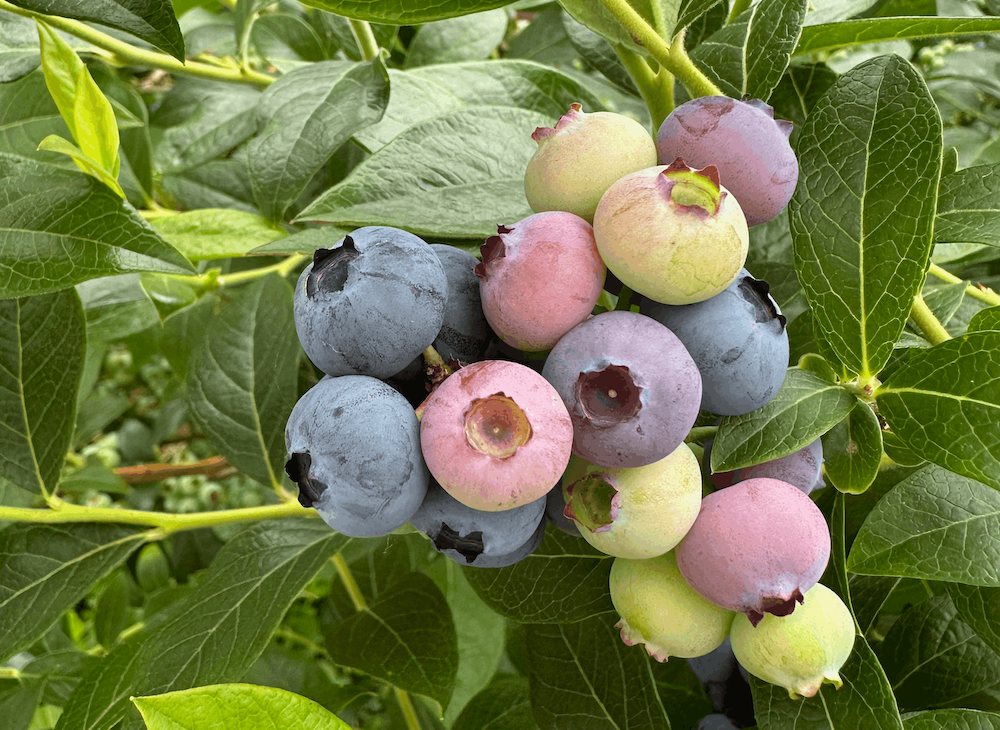
Here's something that'll rearrange how you look at your morning smoothie: Monavale grows 46 varieties of blueberry. Forty-six. Most of us couldn't name two.
The 40-hectare organic orchard sits about 10 minutes out of Cambridge, rows and rows of bushes stretching out towards Pirongia and Maungatautari. We visited during peak harvest to get a look at how grading works when you're processing 200 million berries a year and ended up learning way more than we bargained for.
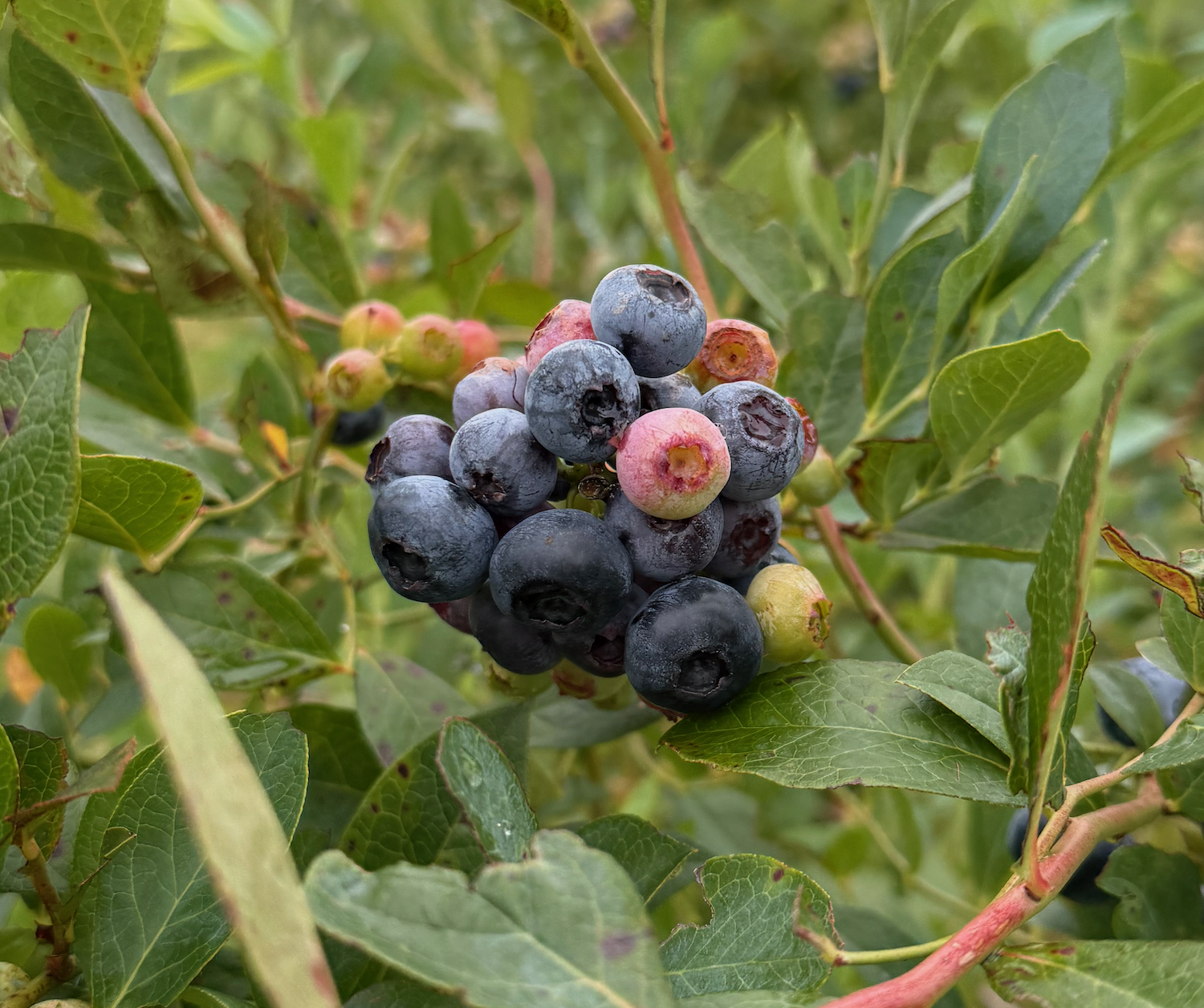
Each of Monavale's 46 varieties ripens at a different time, behaves differently on the plant, and gets used for different things. The ones we get are mostly Highbush and Rabbit Eye varieties. Rabbit Eye gets its name because the berries look like a rabbit's eye before they ripen.
There's also one called Sunset that turns pinky-blue as it ripens. Genuinely beautiful. But it causes headaches at grading because it doesn't look like what people expect a blueberry to look like. We'll come back to that.
Some varieties are ready in 4 weeks, others take 14. Harvest runs from November to March, and every single plant gets picked at least twice to catch the berries when they're actually ripe. Not before. Not after. When they're ready.
While we were there, 6 tonnes of fruit went through grading. About 350kg came out the other side as wonky-grade. The reasons are pretty consistent.
Brown patches are the main one. It's called russeting - happens when berries rub against branches or leaves as they grow. Completely harmless. Totally edible. Just not the smooth, uniform blue that supermarkets want on their shelves.
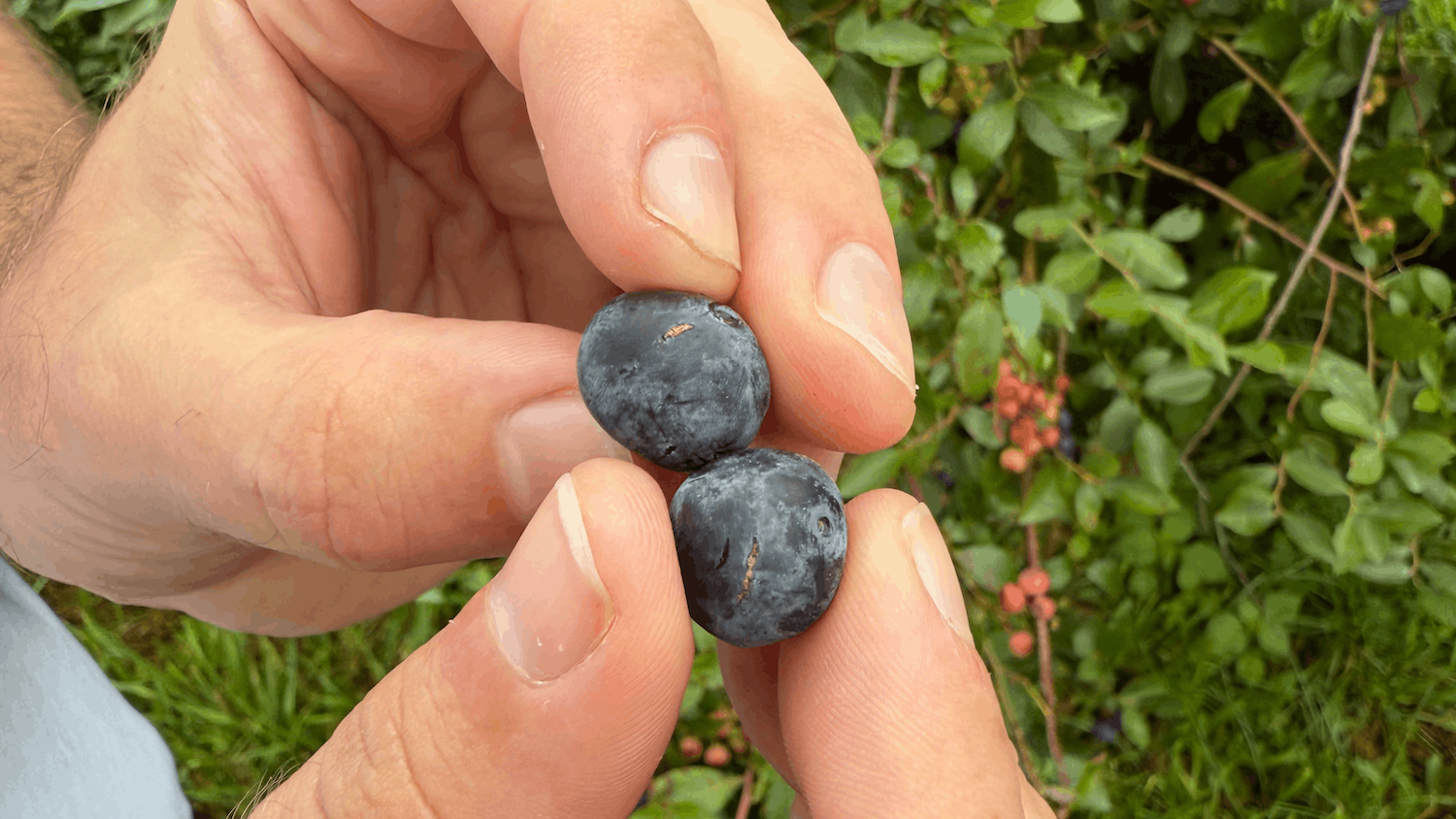
Stalks. Some varieties hold onto their stems, or have thicker attachments that don't snap off cleanly. You can eat them (most people don't bother), but they're fine to leave on.
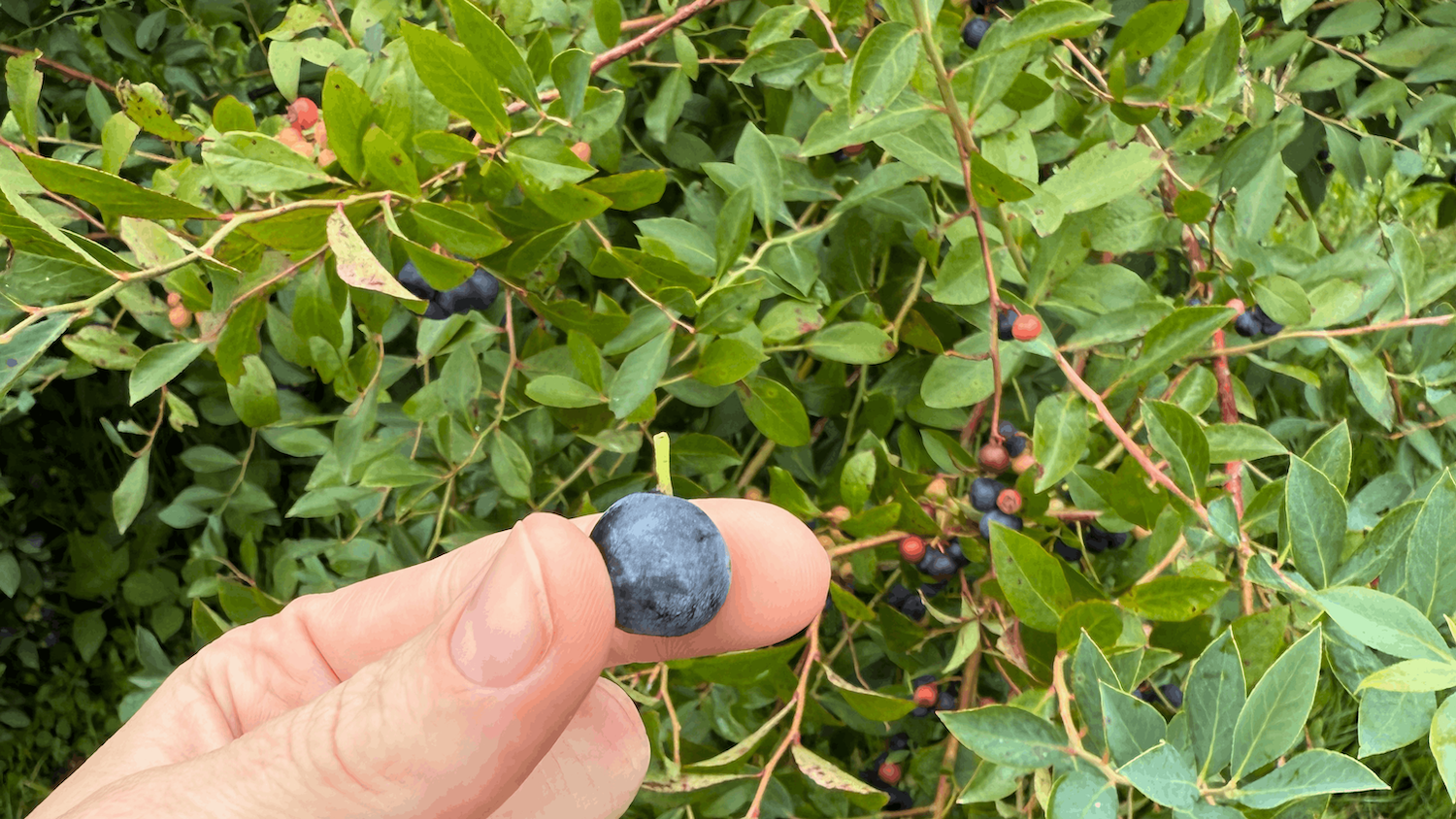
Size and colour. Anything that falls outside the tight retail specs. Slightly smaller, slightly paler, or that pinky-blue Sunset colour we mentioned. They all taste the same. Some of the wonky ones are actually sweeter - which makes them brilliant for freezing or eating straight from the punnet.
None of this has anything to do with quality. All of it has to do with appearance.
You know that white coating on blueberries? It's 100% natural and the sign of a healthy berry. The plant produces it to protect the berry and help it stay fresh longer. It's called bloom, and it's basically the berry's own built-in preservative.
Here's the thing: conventional growers often spray their berries to strip the bloom off, because without it they look darker and glossier on the shelf. More "blueberry-looking," if you will.
But those berries don't last as long once you get them home.
At Monavale, the bloom stays on. It's one of those things that looks "wrong" in a supermarket punnet but is actually a sign the berries are fresher and haven't been messed with. Next time you see that white dusty coating - leave it. It's doing its job.
Monavale is fully organic, which means no synthetic sprays or fertilisers. Their whole approach starts with soil health - build good soil, grow strong plants, and avoid the spray cycle that comes with trying to force things along.
Weed control? All physical. Mowing. Mulching. No herbicides. It's more work, but it shows in the fruit.
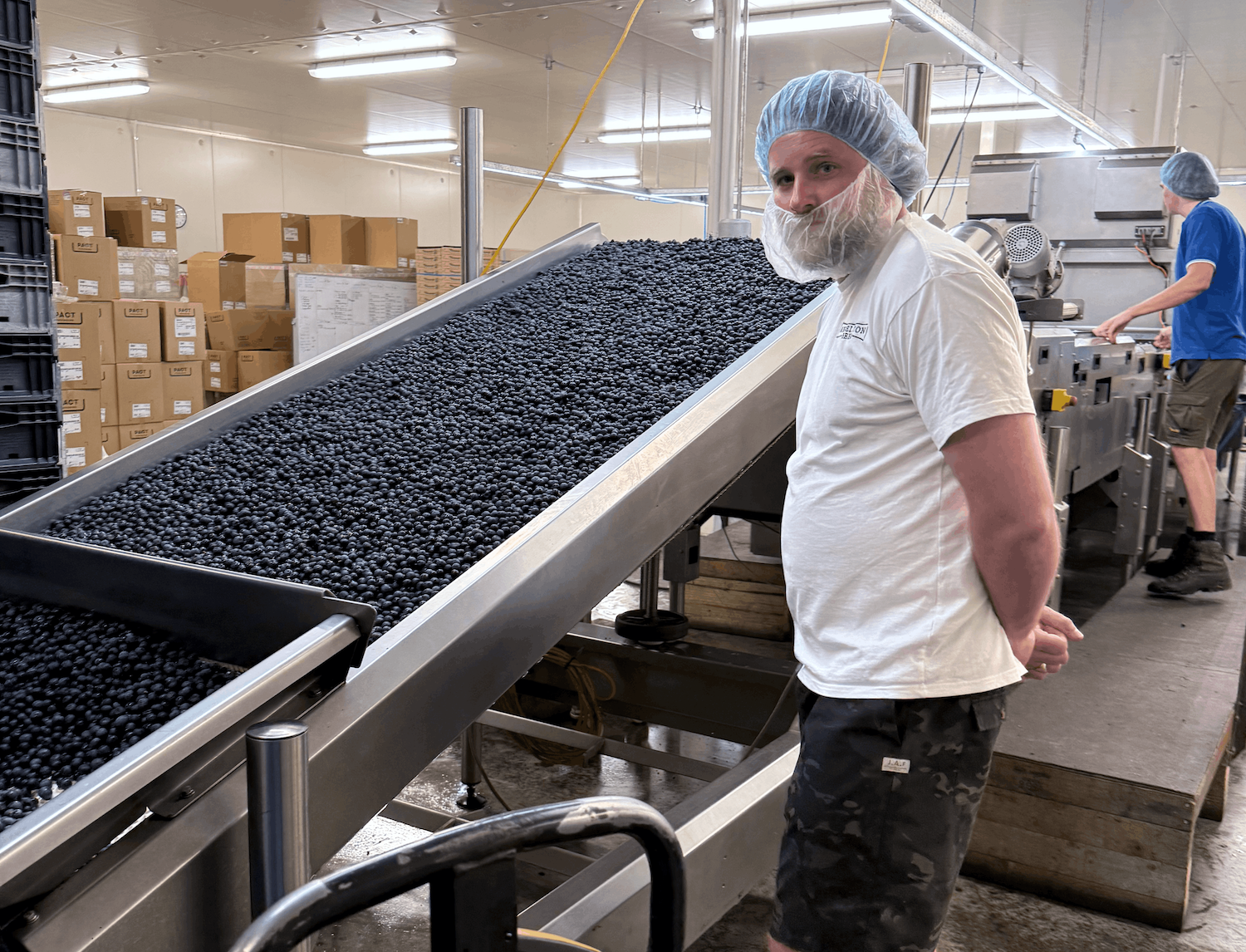
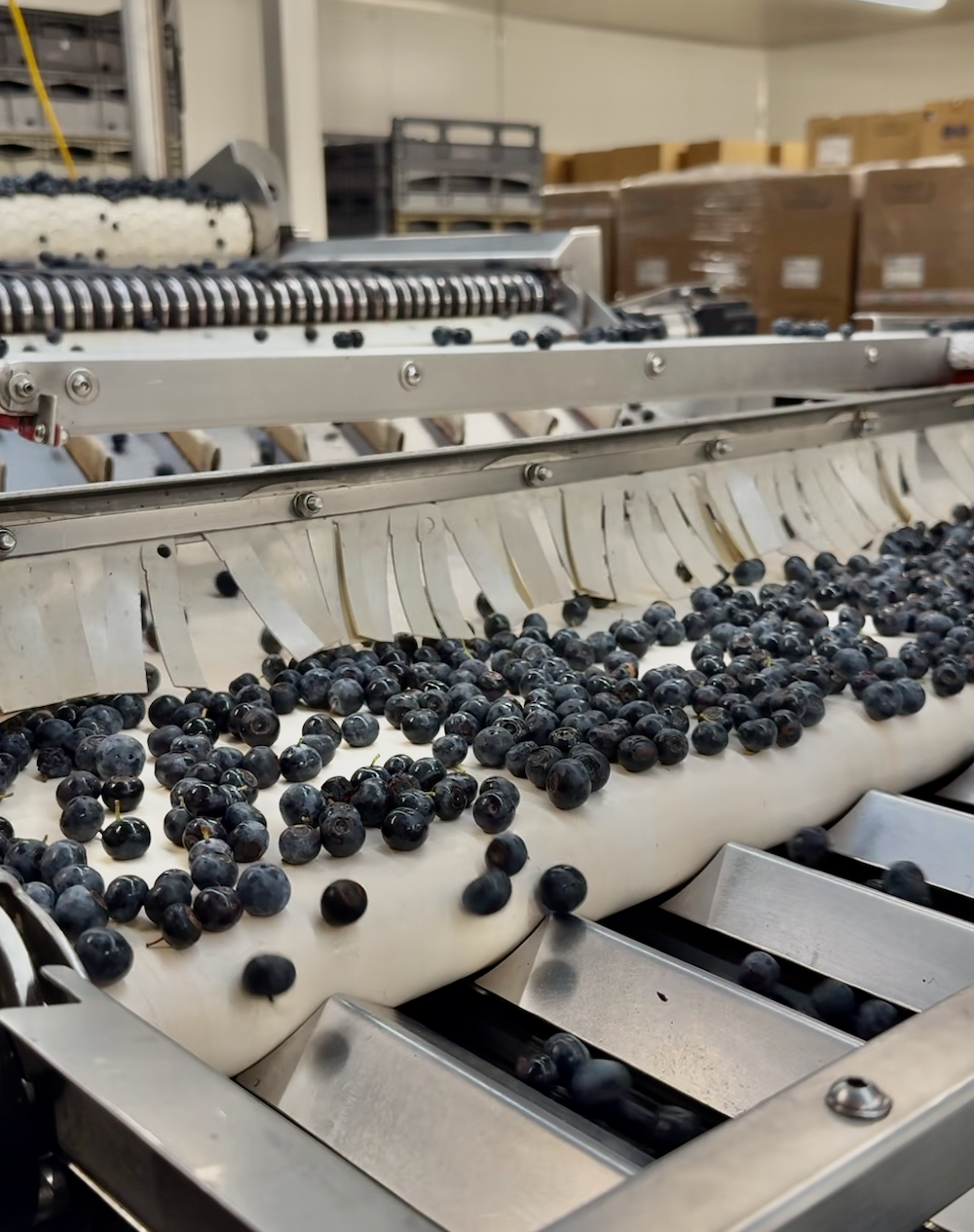
Berries go through a pre-sort first to catch anything obviously wrong - too soft, damaged, not ripe enough. Then they travel along a conveyor belt, drop into individual slots, and each berry gets photo-scanned for size, colour, and shape.
The speed? 260 berries per second.
An algorithm sorts them into export-grade, freezer-grade, or wonky-grade. If any get missed, they loop back through for a second scan. Then someone does a final check by hand, because no machine is perfect. From there they're punnetted, chilled to 2°C, and sent out. Including to us.
Growers measure sweetness using something called Brix levels - basically sugar content. Later-season varieties score higher, meaning they're sweeter, softer, and hold their flavour better when frozen.
Export markets want firm, glossy, perfect-looking berries. We get the russets, the stalks, and the Sunsets that are slightly the wrong colour but taste exactly right. Sometimes better.
Blueberries are actually scarce across New Zealand this year. Less fruit available means prices are rising and the season could finish earlier than usual. Part of it is export demand - premium berries heading overseas, leaving less for local markets.
We'll be getting what we can from Monavale, but expect smaller amounts and shorter windows than normal. It's a good reminder that what ends up in your box isn't just shaped by the weather - it's pollination, global markets, and a dozen other things most of us never think about.
We're working directly with growers like Monavale to make sure good fruit doesn't go to waste just because it doesn't fit a spec sheet. And thanks to Wonky customers, we've diverted thousands of punnets from waste this year.
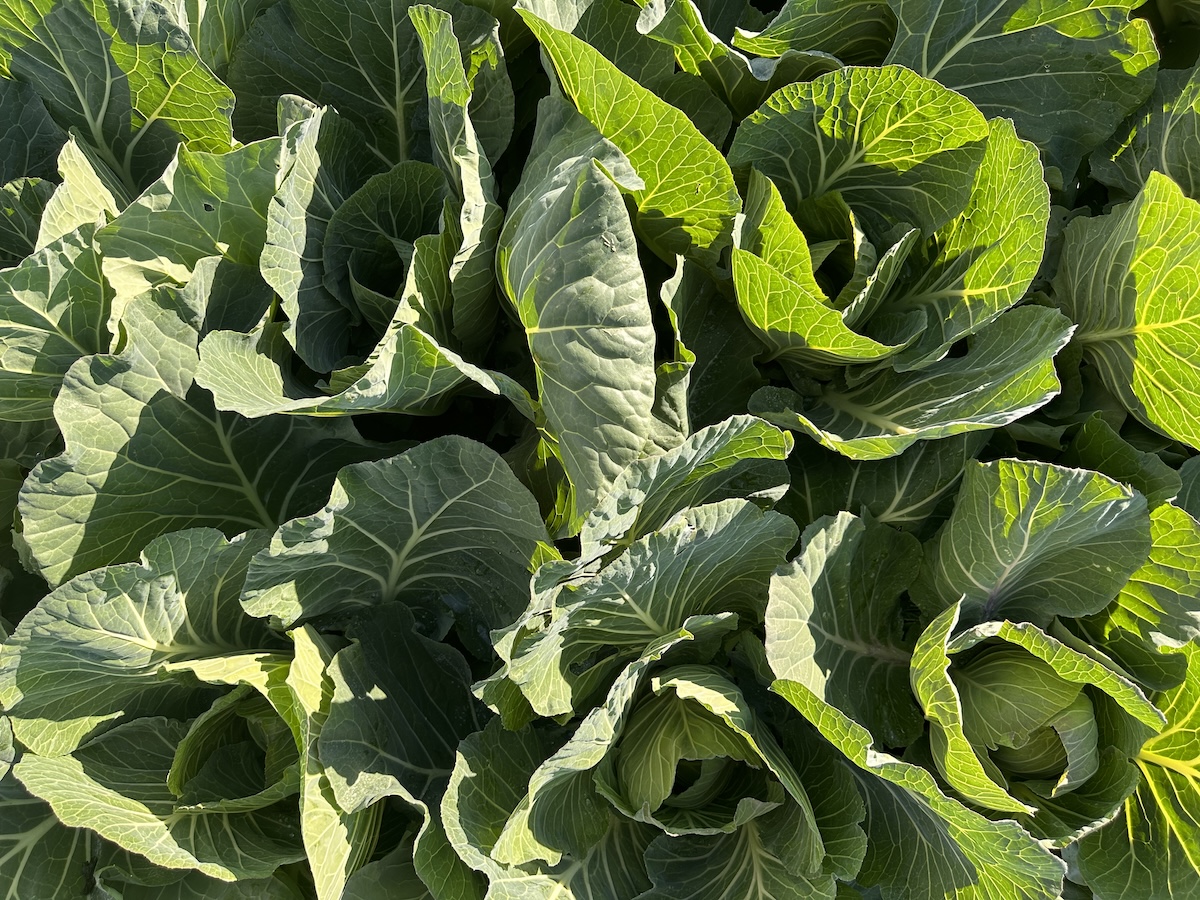
A bumper spring for greens and brassicas. What's filling your box right now, and what all that abundance means for the growers.
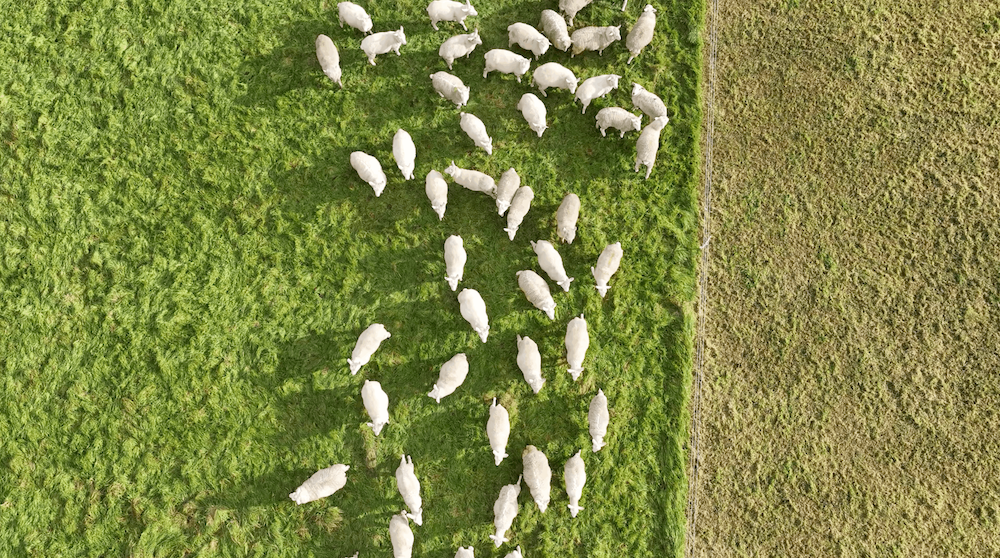
The best meat we grow mostly leaves the country. We work with small family farms to bring some of it home instead.
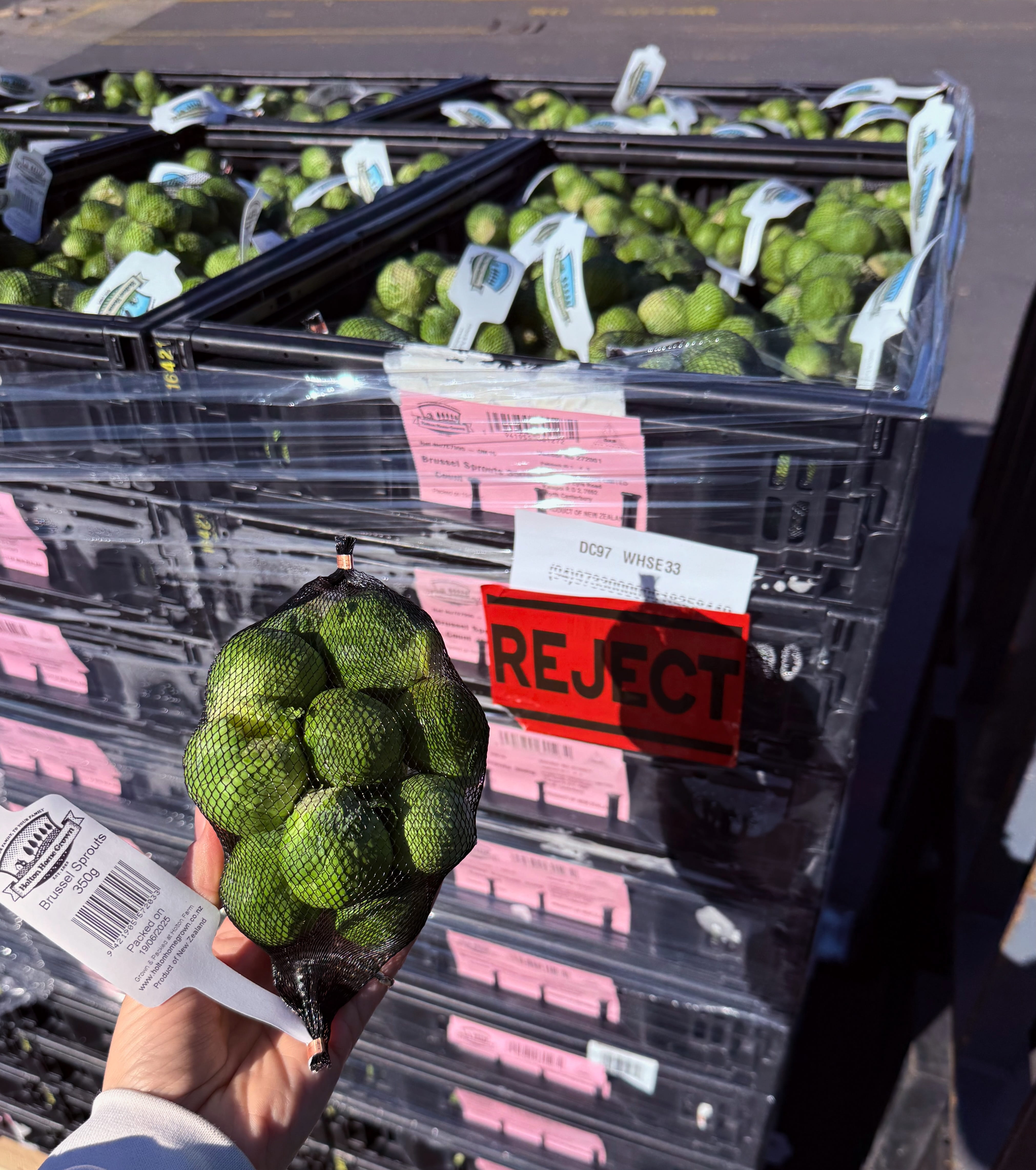
Let’s talk about something that happens every day on farms across New Zealand, but most people never see.

Most of us buy the same ten brands on repeat without really thinking about why. Not because they're the best option. Just because they're always there. Here's why.


tell us what you think